
 Tamika
Thrill rides are a major attraction category in modern amusement parks, offering visitors dynamic motion, rapid changes in direction, elevated heights, and distinctive sensory experiences. From high-speed rotating attractions to large swinging structures, these rides can strengthen a park’s identity and broaden its appeal to visitors seeking excitement.
For park owners and investors, selecting the right thrill ride involves more than comparing ride height, speed, or visual impact. Passenger capacity, operating efficiency, structural design, safety systems, maintenance requirements, and installation costs all influence the long-term value of an attraction.
Understanding the main types of thrill rides and their engineering characteristics helps buyers identify suitable equipment for different sites and visitor groups. It also provides a practical framework for evaluating amusement rides for sale and comparing manufacturers.
1. What Defines a Thrill Ride?
A thrill ride is an amusement attraction designed to create excitement through controlled physical motion and sensory stimulation. Depending on its configuration, the experience may involve acceleration, rotation, swinging, elevation, or a combination of these movements.
Unlike attractions that primarily emphasize scenery or gentle movement, thrill rides often use more pronounced changes in velocity, orientation, or perceived height. These characteristics make mechanical design and operational control particularly important.
Motion and Ride Intensity
Ride intensity depends on several interacting factors. Acceleration, rotational speed, movement amplitude, ride duration, and the direction of motion all influence how passengers perceive an attraction.
A ride with a large swinging arc may produce a different sensation from one that combines rapid rotation with cabin tilting. Maximum speed alone therefore provides an incomplete picture of the passenger experience.
Park operators should evaluate the complete motion profile when selecting equipment. The intended audience, operating environment, and existing attraction portfolio should all inform the decision.
Visual Impact and Visitor Appeal
Many thrill rides feature elevated structures, colorful moving components, or distinctive silhouettes. These characteristics can make them visible across a park and help establish a recognizable focal point.
Visual prominence can support attraction marketing, particularly when a ride is positioned near an entrance or within a dedicated thrill zone. However, the strongest investment is not necessarily the tallest or fastest model. The attraction should complement the park’s overall theme, available space, and visitor demographics.
2. Common Types of Thrill Rides
Thrill rides use different mechanical arrangements to deliver distinct experiences. Understanding these differences helps buyers compare equipment according to its intended function rather than relying solely on headline specifications.
Pirate Ship Ride
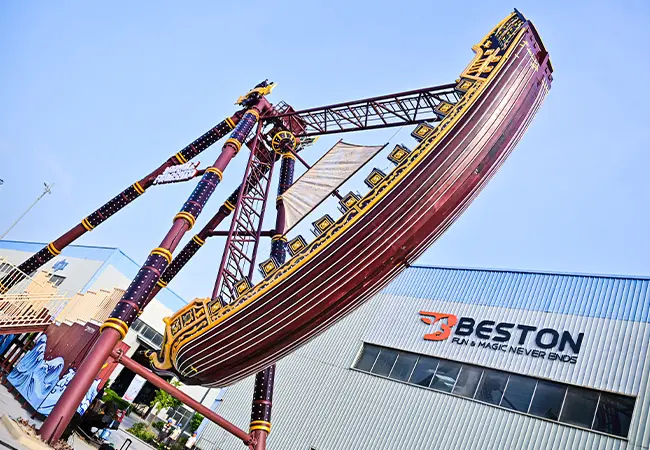
A pirate ship ride uses a suspended boat-shaped passenger cabin that swings back and forth around a supporting pivot. The familiar nautical appearance makes it suitable for family-oriented amusement parks as well as larger venues that combine moderate and high-intensity attractions.
The ride’s intensity depends on factors such as the swing amplitude, passenger loading, operating sequence, and overall dimensions. Some models emphasize a gentler rocking experience, while others provide a more pronounced swinging motion.
Customization can strengthen the attraction’s thematic appeal. Pirate flags, decorative sails, maritime colors, anchors, and sculpted figureheads can help the ride fit an ocean, adventure, or fantasy-themed area.
From an operational perspective, buyers should consider passenger capacity, loading arrangements, structural support, restraint systems, and access for maintenance. Decorative elements should be designed to withstand the intended operating environment without interfering with moving components or required safety clearances.
Pendulum Ride
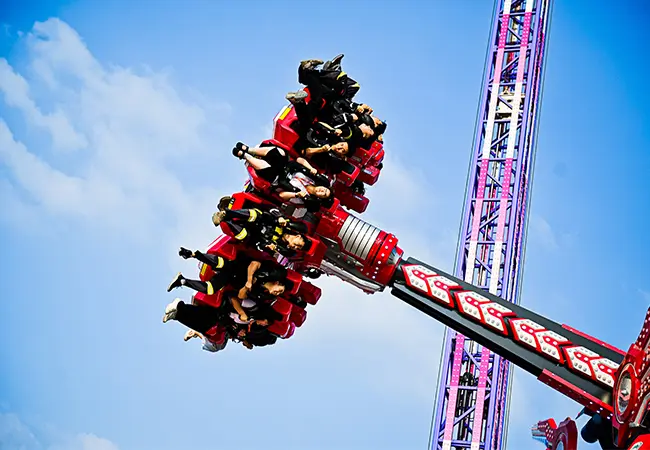
A pendulum ride suspends a passenger-carrying assembly from a supporting structure and moves it through a swinging arc. Depending on the model, the passenger assembly may also rotate or tilt while the main arm swings.
The attraction creates a combination of elevation changes, directional movement, and changing passenger orientation. Larger models can become prominent landmarks within a thrill-oriented amusement park.
When evaluating a pendulum ride, buyers should examine the maximum swing angle, passenger capacity, operating cycle, drive arrangement, and foundation requirements. The movement of the passenger assembly and the main arm must be coordinated according to the manufacturer’s design.
Maintenance planning should account for the principal load-bearing connections, drive components, bearings, and passenger restraints. These systems experience repeated operating loads and require inspection in accordance with the approved maintenance schedule.
Energy Storm Ride
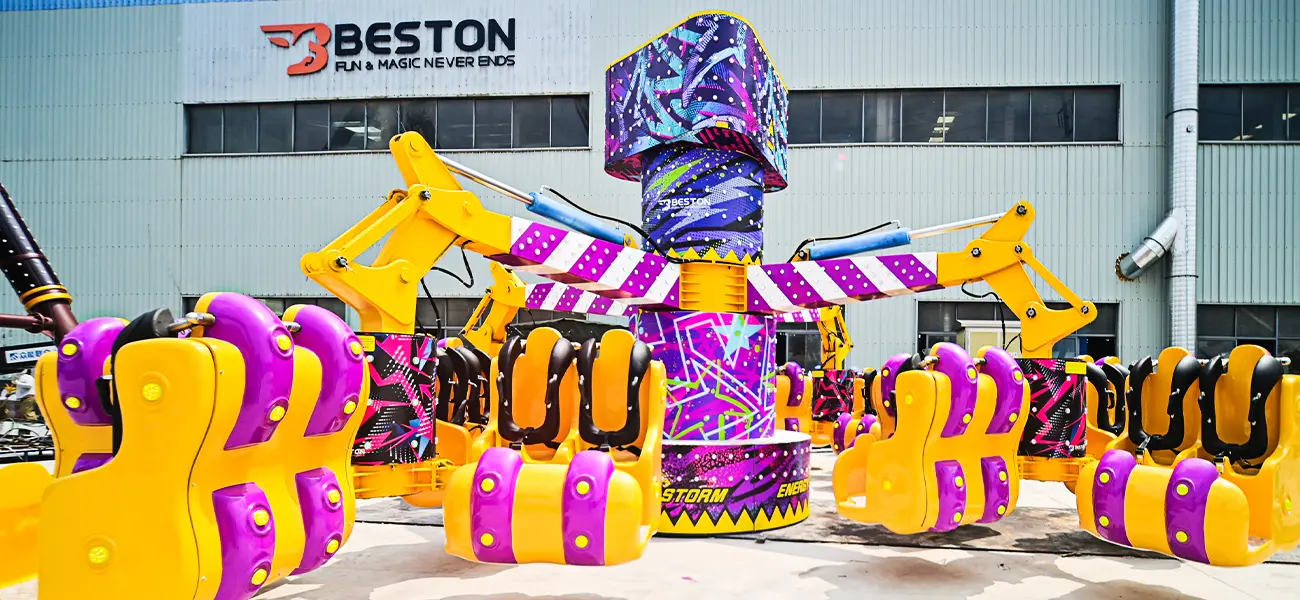
An energy storm ride is a rotating thrill attraction that can combine arm rotation, passenger-cabin rotation, and cabin tilting, depending on the specific model. This combination creates a more complex movement profile than a ride that uses only a single swinging or rotating motion.
The attraction can provide a visually dynamic experience while accommodating multiple passengers in one operating cycle. Its suitability depends on the design configuration, permitted passenger range, operating parameters, and available installation space.
For buyers, the engineering details deserve particular attention. The main rotating assembly, cabin support structure, restraint mechanisms, drive components, and control system must function as an integrated system.
An energy storm ride may suit a park seeking a signature thrill attraction with several coordinated movements. However, the operating complexity and maintenance requirements should be evaluated using the manufacturer’s technical documentation rather than inferred from the ride’s appearance.
3. How to Choose the Right Thrill Ride
Selecting a suitable attraction requires a clear understanding of the park’s commercial objectives, physical constraints, and target audience.
Match the Ride to the Target Audience
A park serving families may benefit from a balanced selection of moderate and high-intensity attractions. A destination focused on thrill-seeking visitors may prioritize more pronounced motion, larger structures, or complex ride sequences.
The decision should account for passenger eligibility, including the manufacturer’s specified height, weight, age, and health restrictions. These requirements affect the potential customer base and should be reflected in operational planning.
A diverse attraction portfolio can also help distribute visitors across different ride categories. This is particularly useful for parks that want to accommodate families, teenagers, and adult visitors within the same venue.
Evaluate Available Space
The required installation area extends beyond the ride’s physical footprint. Operators must also consider passenger queues, loading platforms, access routes, safety barriers, control stations, and maintenance clearance.
Moving components may require additional clearance during operation. The manufacturer should provide layout drawings that identify the relevant operating envelope and site requirements.
Foundation conditions also matter. Soil bearing capacity, underground utilities, drainage, and local environmental loads may affect construction costs and installation schedules.
Compare Capacity and Operating Cycle
Passenger capacity and cycle time influence the number of visitors a ride can serve. However, theoretical throughput should not be confused with actual daily performance.
A simplified estimate of hourly capacity is calculated by multiplying the number of passengers per cycle by the number of cycles completed per hour. Actual throughput may be lower because of boarding, restraint checks, unloading, and operational interruptions.
Buyers should request the manufacturer’s rated capacity and operating-cycle information, then assess how those figures translate into realistic service levels under local conditions.
4. Safety and Engineering Considerations
Safety is a fundamental requirement for every thrill ride. Structural integrity, mechanical reliability, passenger containment, control systems, and operating procedures must work together.
Structural Design
The supporting structure must accommodate the loads generated by passengers, moving assemblies, acceleration, braking, and other specified operating conditions. Repeated loading can contribute to fatigue, making appropriate material selection, fabrication quality, and inspection essential.
Foundation design must reflect the ride’s structural loads and site conditions. Buyers should confirm the required foundation dimensions, anchoring arrangements, concrete specifications, and relevant engineering calculations before construction begins.
Passenger Restraints
Restraint systems are designed to keep passengers properly positioned throughout the ride cycle. Their configuration depends on the attraction’s movement profile and the manufacturer’s approved design.
Operators should verify restraint engagement before dispatch and follow the specified procedures for inspecting locking mechanisms, sensors, and associated components. Passenger instructions must also be clear and consistent.
Control and Emergency Systems
Modern thrill rides may use electrical controls, sensors, interlocks, and monitoring systems to manage the operating sequence. Depending on the design, these systems can prevent dispatch when specified conditions are not satisfied.
Emergency procedures should address foreseeable operational interruptions, including how passengers are safely unloaded when a ride stops unexpectedly. Staff training and documented procedures are essential components of the operating system.
Buyers should ask for model-specific technical documentation and verify the standards applicable to the destination market. General claims of international compliance should not replace evidence relating to the actual equipment being purchased.
5. Maintenance and Operational Reliability
Maintenance affects the availability, service life, and operating cost of a thrill ride. A practical maintenance program combines routine inspections, scheduled servicing, component monitoring, and accurate recordkeeping.
Preventive Inspection
Inspection requirements vary by attraction type. A pendulum ride may require particular attention to its pivot assemblies and supporting connections, while a rotating ride may have additional bearings, drive components, and cabin-rotation mechanisms to inspect.
Operators should follow the manufacturer’s maintenance instructions and applicable regulatory requirements. Inspection records should document findings, repairs, component replacements, and any required functional tests.
Spare Parts and Technical Support
The availability of compatible replacement parts can affect how quickly a ride returns to service after a fault. Before purchasing equipment, park owners should clarify spare-parts availability, technical support arrangements, warranty coverage, and troubleshooting procedures.
The agreement should specify the responsibilities of the manufacturer and operator. It should also identify which repairs require qualified technicians or manufacturer authorization.
Staff Training
Operators need to understand the ride’s normal operating sequence, passenger-loading procedures, restraint checks, and emergency arrangements. Maintenance personnel require appropriate technical documentation and training for their assigned tasks.
Well-defined procedures help establish consistent operating practices and reduce avoidable interruptions.
6. Assessing Amusement Rides for Sale
When reviewing amusement rides for sale, buyers should compare the complete project requirements rather than focus exclusively on the equipment price.
Total Project Cost
The purchase price is only one component of the investment. Transportation, foundations, installation, electrical connections, commissioning, training, spare parts, and ongoing maintenance may also contribute to the total cost.
A detailed quotation should identify the equipment included, optional features, delivery terms, installation responsibilities, and warranty conditions. Buyers should also clarify production lead times and the documentation supplied with the ride.
Manufacturer Capability
The manufacturer’s engineering expertise, fabrication processes, quality-control procedures, and project experience can influence the reliability of the finished equipment.
Buyers should request relevant technical specifications, project references, inspection records where available, and details of after-sales support. Any claims concerning performance, service life, or compliance should be supported by appropriate documentation.
Installation and Delivery Planning
Production and installation schedules must align with site preparation, shipping arrangements, and the park’s planned opening date. Delays in foundation work or the availability of lifting equipment can affect the overall project timeline.
Early coordination between the manufacturer, contractor, and park operator helps clarify responsibilities and identify potential constraints before equipment arrives.
7. Building a Balanced Thrill Ride Portfolio
A successful attraction portfolio combines different ride experiences rather than relying on one type of motion. A pendulum ride can deliver large swinging movements, while a pirate ship ride introduces a familiar theme and a different intensity profile. An energy storm ride can add coordinated rotation and tilting, creating another distinct experience.
The best combination depends on visitor demand, site dimensions, budget, and the park’s positioning. Operators should also consider queue distribution, staffing needs, maintenance schedules, and the visual relationship between attractions.
The objective is to create a coherent portfolio in which each ride serves a clear purpose. A well-planned selection can support visitor engagement while making efficient use of available space and operational resources.
Conclusion
Thrill rides combine mechanical engineering, passenger safety, and commercial planning to deliver distinctive amusement experiences. From the swinging motion of a pendulum ride to the themed appeal of a pirate ship ride and the coordinated movements of an energy storm ride, each attraction has specific operational requirements.
For park owners evaluating amusement rides for sale, the most effective approach is to compare ride performance, passenger capacity, site requirements, safety systems, maintenance needs, and total project costs together.
A carefully selected attraction can strengthen a park’s identity and broaden its visitor appeal. With appropriate engineering, installation, staff training, and preventive maintenance, thrill rides can remain valuable components of an amusement park’s long-term development strategy.

